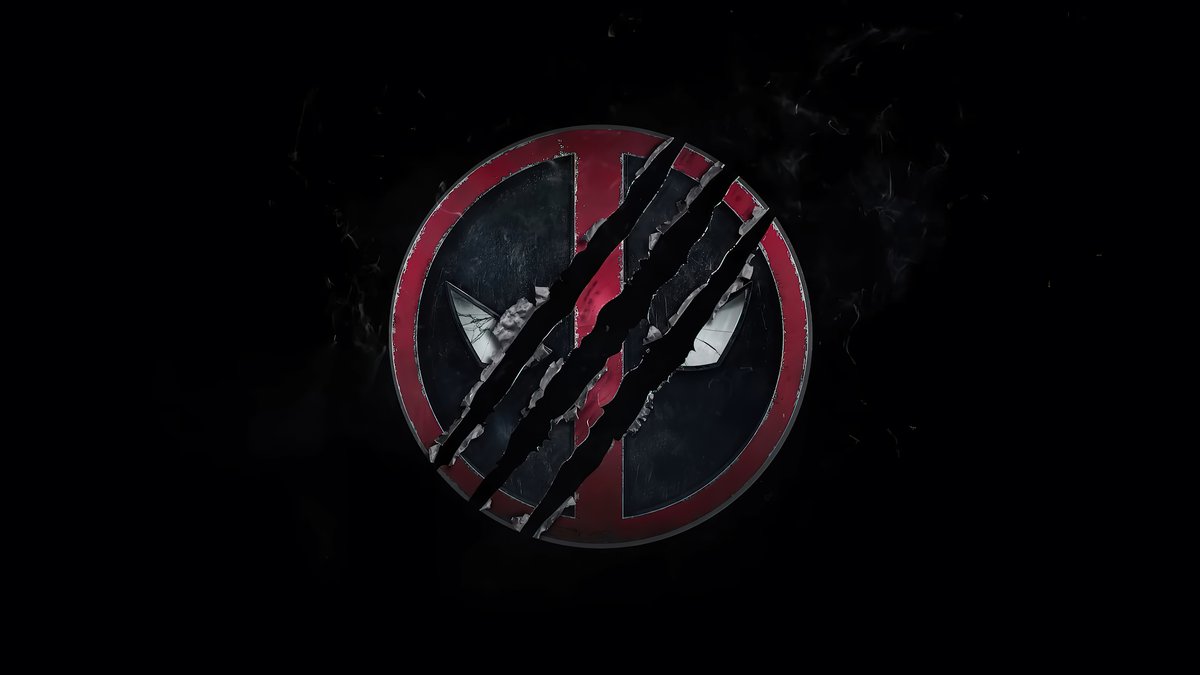
Copyright & Licensing for the Deadpool Logo Is Likely Public Domain
You’ve seen it everywhere: the stark, iconic red and black 'Deadpool' logo, often featuring that signature stylized "D." It’s a design so instantly recognizable, it practically screams the Merc with a Mouth’s irreverent brand. But here’s a question that might surprise you: Is this globally recognized symbol actually protected by copyright? For the original, simple version of the Deadpool logo, the answer is likely no.
This might sound counter-intuitive, especially for a property owned by entertainment giants like Disney and Marvel. Yet, understanding the nuances of copyright law, particularly the "threshold of originality," reveals a fascinating truth: many simple logos, including the foundational Deadpool design, exist in the public domain. This article will unravel the specific legal reasoning behind this, help you navigate the complexities of using such logos, and distinguish between copyright, trademark, and newer, more complex designs.
At a Glance: What You Need to Know About the Deadpool Logo’s Rights
- Original Logo: The simple "Deadpool" text logo, consisting of basic geometric shapes or standard lettering, is widely considered to be in the public domain. It lacks the "originality" required for copyright protection under US law.
- Public Domain Means: You can generally use, reproduce, and modify this specific simple logo without seeking permission or paying royalties for copyright purposes.
- Trademarks Are Different: While the simple logo itself may not be copyrighted, the name "Deadpool" and the overall brand identity (including the logo used in connection with merchandise, films, etc.) are almost certainly protected by trademark law. This prevents you from using it in a way that implies affiliation or endorsement.
- Newer, Complex Logos: More elaborate or stylized versions, like those created for specific films (e.g., Deadpool & Wolverine), often incorporate unique artistic elements that do meet the threshold for copyright protection.
- Font Software Nuance: Even if the letterforms are simple, the underlying font software used to create them might be copyrighted. This is a subtle but important distinction.
The Surprising Truth: Why the Original Deadpool Logo Isn't Copyrighted
Let's cut to the chase: the classic "Deadpool" logo, often depicted as a stylized wordmark in red and black, falls into a peculiar legal category. It's often deemed to be in the public domain. Why? Because it consists "only of simple geometric shapes or text."
Think about it this way: for something to be copyrighted, it needs to possess a minimum level of creative expression – what the law calls "originality." This isn't about how much effort someone put in, but about whether the creation is unique enough to distinguish it from basic elements that everyone should be free to use. A simple circle? Not copyrightable. A square? Nope. A common word written in a standard font? Also not.
The original Deadpool logo, while striking and effective, primarily uses a stylized font that, at its core, doesn't contain sufficiently complex or unique artistic elements beyond what's considered simple text or basic shapes. As noted on Wikimedia, such designs "do not meet the needed for copyright protection, and is therefore in the public domain." This means that, from a pure copyright perspective, its basic design is generally free for anyone to use.
Decoding "Simple Geometric Shapes or Text": When Copyright Doesn't Apply
The concept of the "threshold of originality" is central here. Copyright law in the U.S. (and many other countries) requires a work to be original and fixed in a tangible medium to receive protection. "Original" means it was independently created by the author and possesses at least a minimal degree of creativity.
Where do simple logos fall short? Imagine a logo that's just a common letter of the alphabet, like a bold 'A' or an italicized 'z'. While a designer might put thought into choosing the right typeface, the letter itself isn't considered an original artistic creation in a copyright sense. The same goes for basic geometric forms—squares, circles, triangles—or very common combinations thereof. These are seen as fundamental building blocks that shouldn't be monopolized by any single entity.
The Deadpool logo's classic appearance, which is primarily a wordmark (text) with some stylistic flourishes that don't push it beyond the realm of "simple," fits this description. It's legible, impactful, but not graphically complex enough to cross that originality threshold. It's an important distinction to make, especially when you consider All about the Deadpool logo and its journey through various visual iterations over time.
The Nuance of Fonts and Typefaces: A Hidden Layer of Protection?
Here's where things get a little more intricate, and it's a detail often overlooked: while the design of individual letterforms might not be copyrighted, the software that generates a particular font often is.
The Wikimedia source for the original Deadpool logo rightly flags this: "Although it is free of copyright restrictions, this image may still be subject to WP:PD § Fonts and typefaces." This means that while you can trace, recreate, or type out "Deadpool" in a similar-looking free font without infringing on copyright for the logo design, you cannot simply copy and distribute the actual font file (the software) itself if it's proprietary.
For most casual users wanting to create fan art or even some small-scale commercial items, this distinction is less critical if they are simply recreating the visual appearance of the logo using a different (legal) font or drawing it by hand. However, if you're a designer working on a larger project, ensuring you have the right licenses for any font software you use is always a best practice. It’s a good example of how intellectual property law often involves navigating multiple, sometimes overlapping, layers of protection.
The Evolution of Logos: Why Newer Deadpool Designs Might Be Different
While the simple, classic Deadpool logo often resides in the public domain, it's crucial to understand that not all Deadpool-related imagery shares the same fate. Companies constantly evolve their branding, and as logos become more elaborate, stylized, or incorporate unique artistic elements, they swiftly cross the threshold into copyright protection.
Consider the meaning behind the Deadpool logo's design. While the original's meaning might be simple legibility and impact, newer designs often infuse more complex creative choices. Take, for example, the "Deadpool & Wolverine Logo" used for the upcoming film, as referenced in our research. This logo, potentially featuring combined elements, unique textures, or specific graphical interplay between the two characters' names, is highly likely copyrighted by Disney/Marvel. It’s no longer just simple text; it’s an artistic composition designed to brand a specific film and its associated merchandise.
The moment a logo moves beyond basic text or simple geometric shapes to include distinct artistic embellishments, custom illustrations, unique visual metaphors, or complex arrangements, it almost certainly gains copyright protection. For these newer, more intricate versions, you would absolutely need explicit licensing from the rights holders before using them in any commercial capacity. Attempting to recreate or use such a copyrighted logo without permission could lead to legal headaches.
Navigating the Trademark Minefield: More Than Just Copyright
This is perhaps the most critical distinction for anyone considering using the Deadpool logo: even if the simple wordmark isn't copyrighted, the name "Deadpool" and its associated imagery are fiercely protected by trademark law.
What's the difference?
- Copyright protects original works of authorship (like books, songs, complex art, elaborate logos) from being copied.
- Trademark protects brand names, slogans, and logos used to identify the source of goods or services from being confusingly similar to others.
Marvel and Disney hold powerful trademarks on the "Deadpool" name, character, and brand. This means you cannot use the simple, public domain Deadpool logo (or any version) in a way that suggests your product or service is endorsed by, affiliated with, or coming from Marvel/Disney.
Practical Impact:
You might be able to print the basic Deadpool wordmark on a personal t-shirt for your own enjoyment (though even that can be grey if it looks too commercial). However, if you try to sell t-shirts, mugs, or any other merchandise featuring the simple Deadpool logo, even if it's technically in the public domain for copyright purposes, you would almost certainly infringe on Marvel's trademark rights. This is because consumers would likely assume your product is an official Marvel item. Understanding Deadpool logo variations can help you spot which elements are more likely to be trademarked versus just copyrighted.
Practical Guidance for Using the Deadpool Logo (and its Variations)
So, you're clear on the copyright vs. trademark distinction. Now, let's talk about what this means for you in practical terms.
1. Using the Original, Simple "Deadpool" Wordmark (Public Domain for Copyright)
- For Personal, Non-Commercial Use: Generally, you're in the clear. If you want to draw the simple logo in your sketchbook, use it in a fan-made video that isn't monetized, or print it on a personal item for yourself, you're unlikely to face legal issues from a copyright perspective. The trademark issue is still technically present if it could confuse viewers about endorsement, but enforcement is rare for purely personal, non-commercial uses.
- For Commercial Use (Caution Advised!): This is where it gets tricky. While the copyright might not apply, the trademark absolutely does. If you use the simple Deadpool logo on products or services you intend to sell, you are very likely infringing on Marvel's trademark rights. This is because your use could create confusion in the marketplace, making consumers believe your item is official merchandise.
- Recommendation: Avoid commercial use of the simple logo unless you have explicit permission (a license) from Marvel/Disney. This is almost always the safest route to avoid costly legal battles.
2. Using Newer, More Complex Deadpool Logos (Copyrighted and Trademarked)
- Assume Full Protection: Any Deadpool logo that features unique artistic designs, character elements, specific stylization beyond simple text (like the Deadpool & Wolverine film logo), or intricate graphical compositions is fully protected by copyright and trademark.
- No Unlicensed Use: You absolutely cannot use these logos for any purpose (personal or commercial) without obtaining a license from Marvel/Disney. This includes reproducing them, modifying them, or distributing them.
- Fair Use/Fair Dealing: In very limited circumstances, you might be able to use a copyrighted logo under "fair use" (U.S.) or "fair dealing" (other countries) principles. This typically applies to parody, criticism, commentary, news reporting, teaching, scholarship, or research. It's a high legal bar, highly fact-specific, and rarely applies to using a logo to brand your own goods or services. Do not rely on fair use without legal counsel.
3. Navigating Fan Art and Derivative Works
Many creators want to incorporate Deadpool's likeness or logo into fan art.
- Original Art Inspired by Deadpool: Creating your own original artwork inspired by Deadpool, but not directly copying his copyrighted likeness or trademarked logos, generally falls into a safer zone.
- Selling Fan Art: The commercial sale of fan art often operates in a legal grey area. While many IP holders tolerate it for smaller creators (as it builds community), they always reserve the right to shut it down if they feel it undermines their brand or becomes too widespread. Selling items that feature direct copies of copyrighted logos or character designs is much riskier than selling entirely original artwork of a character. When considering Deadpool logo merchandise, remember the commercial implications.
Avoiding Pitfalls and Common Misconceptions
The world of intellectual property can be a minefield. Here are some common traps to avoid:
- "It's on the internet, so it's free to use." This is perhaps the biggest misconception. The internet is a publication platform, not a public domain repository. Most content online is copyrighted.
- "I'm not making money, so it's fine." While commercial intent often increases the likelihood of a lawsuit, copyright and trademark infringement can occur even with non-commercial uses. The focus is on whether a protected work was used without permission.
- "Modifying it slightly makes it mine." Not necessarily. If your modified logo is still substantially similar to the original, or if the "deadpool-ness" is still instantly recognizable, it could still be considered a derivative work and infringe on the original’s rights (if copyrighted) or trademark. You can't just change the color or add a minor flourish and claim it's a new work.
- "I gave credit, so it's okay." Giving credit is polite and professional, but it does not substitute for obtaining permission or a license to use copyrighted or trademarked material.
- Ignoring Trademarks: This is the most dangerous pitfall when dealing with the simple Deadpool logo. Even if copyright is absent for the basic design, trademark law exists specifically to prevent consumer confusion regarding the source of goods and services. A robust understanding of Deadpool logo licensing often starts with understanding trademark law. Using the simple logo commercially is a direct challenge to the Deadpool brand’s trademark.
What About the "Deadpool" Text on Different Backgrounds or with Other Elements?
Often, people see the Deadpool text against a different background, or combined with other elements. Does this change its public domain status?
The simple "Deadpool" wordmark itself remains in the public domain for copyright purposes due to its lack of originality. However, if that text is combined with:
- A unique background design: The background itself might be copyrighted if it's original and creative.
- An original illustration of Deadpool: The character illustration is definitely copyrighted.
- Other unique graphic elements: These elements could also be copyrighted.
In such cases, you'd be dealing with a composite work. While the text component might be public domain, the overall image—the combination of elements—would likely be copyrighted. You would need to assess the copyright status of each individual component and the overall composition. It's rarely worth the risk of trying to parse out public domain elements from copyrighted ones when dealing with official branded imagery.
Before You Print That T-Shirt: Your Actionable Checklist
Navigating intellectual property rights can feel like a superpower (or super headache) in itself. Here's a practical checklist to keep you on the right side of the law when contemplating using the Deadpool logo or similar designs:
- Identify the Specific Logo: Are you looking at the very simple, classic "Deadpool" wordmark, or a more complex, stylized, or film-specific version (like the Deadpool & Wolverine logo)? The simpler it is, the more likely the copyright is public domain. The more complex, the higher the chance it's copyrighted.
- Determine Your Use Case: Is it purely personal and non-commercial (e.g., drawing for fun, private fan art)? Or is there any commercial intent (e.g., selling items, promoting a business)?
- Prioritize Trademark Law: Regardless of copyright status, assume the brand name "Deadpool" and any associated logos used to identify goods/services are trademarked. This is the biggest hurdle for commercial use of even the public domain wordmark.
- Avoid Implied Endorsement: Never use any Deadpool logo in a way that suggests your product or service is official, endorsed by, or affiliated with Marvel/Disney unless you have a formal licensing agreement. This is trademark infringement.
- Check Font Licensing: If you're recreating the logo using a particular font, ensure the font software itself is licensed for your intended use (especially commercial). Many free fonts are only free for personal use.
- When in Doubt, Don't: If you're unsure, or if your intended use is commercial, the safest path is to avoid using branded elements entirely, or seek legal counsel specializing in intellectual property law. A quick consultation can save you immense headaches and costs down the line.
- Consider Original Inspiration: If you want to evoke the spirit of Deadpool without infringing, create your own original artwork or designs that are inspired by the character but do not directly copy protected logos or character designs.
While the original Deadpool logo presents a fascinating case study in copyright's threshold of originality, remember that public domain status for copyright doesn't grant carte blanche. Trademark protection is a powerful force, and for a brand as prominent as Deadpool, it's always lurking to protect the integrity of its commercial identity. Stay smart, stay informed, and avoid legal entanglements!