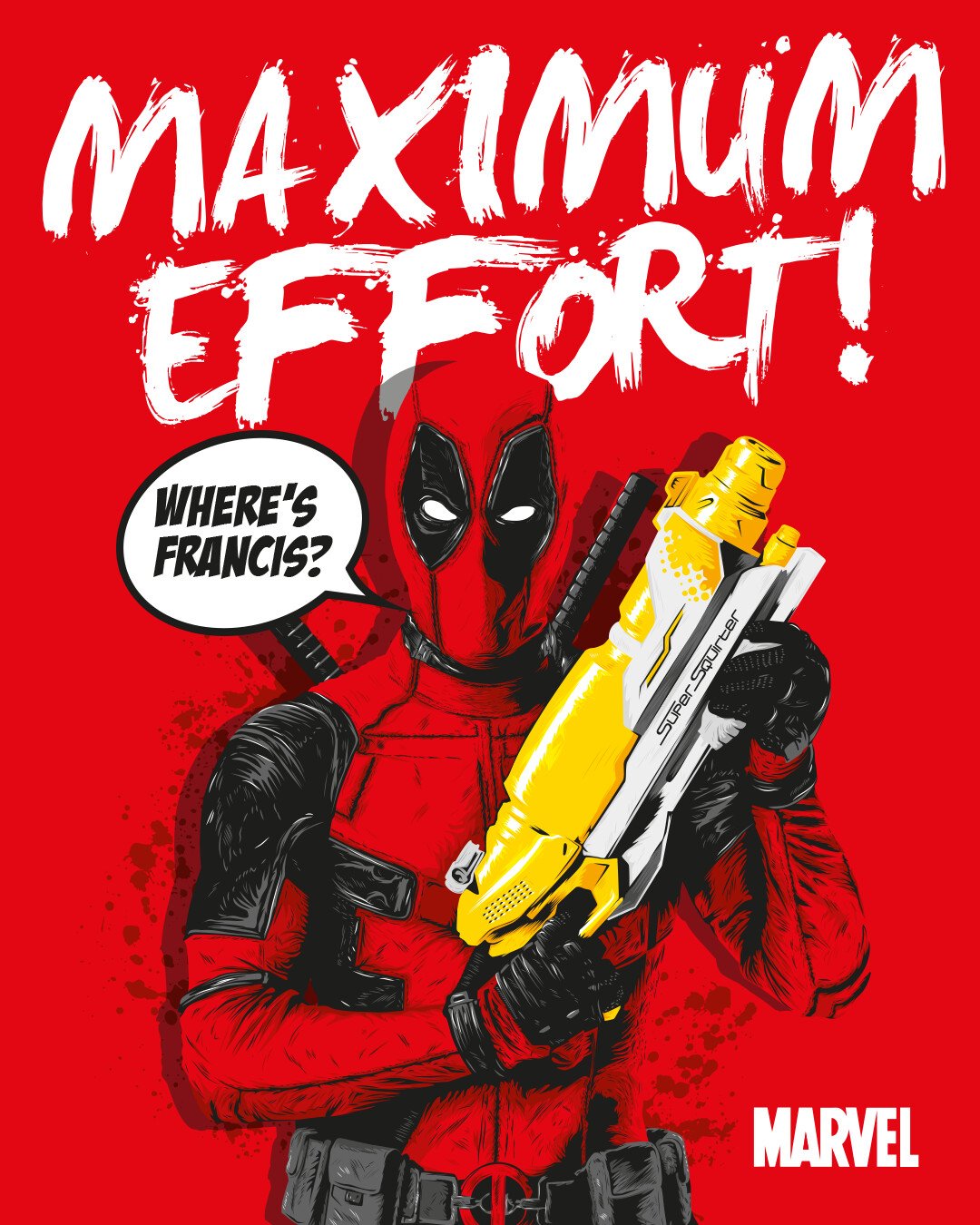
When you think of a character who embodies irreverence, wit, and a healthy dose of chaos, Deadpool immediately springs to mind. But beyond the fourth-wall breaks and katana-wielding antics, there's a vibrant universe of creativity that thrives through Fan Art & DIY Deadpool Logo Design. This isn't just about drawing the Merc with a Mouth; it’s about taking his iconic symbol and infusing it with personal flair, humor, and outright genius. It's where fandom truly becomes art, inviting creators of all skill levels to put their unique spin on one of pop culture's most recognizable anti-heroes.
At a Glance: Crafting Your Own Deadpool Icon
- Understanding the Appeal: Learn why Deadpool's character and brand resonate so deeply with artists.
- Legal Landscape: Get a clear overview of copyright, fair use, and how they apply to fan art.
- Deconstructing the Logo: Break down the essential visual elements that make the Deadpool logo so recognizable.
- Tools of the Trade: Discover the best traditional and digital tools for bringing your designs to life.
- Step-by-Step Creation: Follow a practical guide to conceptualize, sketch, and refine your unique logo.
- Beyond the Standard: Explore innovative design ideas, from crossovers to thematic variations.
- Showcasing Your Work: Find out where to share your creations and connect with the Deadpool fan community.
- Common Pitfalls: Learn how to avoid mistakes and elevate your fan art game.
Why Deadpool? The Merc with a Mouth's Magnetic Appeal
Deadpool, or Wade Wilson, is a character unlike any other in the comic book pantheon. His meta-commentary, dark humor, and self-awareness make him endlessly adaptable and relatable, despite his mercenary profession. This unique personality extends to his visual identity, especially his logo. It's simple, bold, and instantly recognizable: a stylized, almost cartoony, pair of eyes set within a circular field, often accented by his signature red and black.
This visual simplicity, combined with his complex personality, provides a perfect canvas for fan artists. You’re not just drawing a symbol; you’re channeling an attitude. Fans love to create artwork that captures his essence, whether it's a gritty, realistic portrayal or a whimsical, Chibi-style interpretation. This widespread appeal fuels platforms like DeviantArt and Etsy, where thousands of unique Deadpool fan art pieces are shared and sometimes sold, demonstrating the sheer volume and diversity of creative output. To truly appreciate this phenomenon, it helps to understand All about the Deadpool logo itself, from its origins to its evolution through comics and film.
Navigating the Fan Art Landscape: Copyright, Fair Use, and Community Spirit
Before diving into the exciting world of design, it's crucial to understand the rules of the game, particularly regarding intellectual property. When you're creating Fan Art & DIY Deadpool Logo Design, you're working with copyrighted material owned by Marvel Entertainment (Disney). This isn't meant to stifle creativity, but to inform responsible artistic practice.
In simple terms, fan art typically falls under a grey area of copyright law. Most fan artists operate under the informal understanding that their work is a tribute, not a challenge to the original creator's ownership. The legal concept often discussed here is "fair use," which allows limited use of copyrighted material without permission for purposes like commentary, criticism, news reporting, teaching, scholarship, or research.
However, "fair use" is a legal defense, not an automatic right. Key factors in determining fair use include:
- Purpose and Character of the Use: Is it transformative (adding new meaning or message)? Is it for non-profit educational use, or commercial gain?
- Nature of the Copyrighted Work: Factual works have less protection than creative works.
- Amount and Substantiality of the Portion Used: How much of the original work is taken?
- Effect of the Use Upon the Potential Market For or Value of the Copyrighted Work: Does your fan art compete directly with the original work or harm its market?
Generally, creating fan art for personal enjoyment or to share freely within a community is less likely to cause issues. Selling fan art, especially if it directly replicates the original or looks like official merchandise, ventures into riskier territory. Many large intellectual property holders tolerate fan art because it fosters community and keeps their brands relevant, but they reserve the right to enforce their copyrights, particularly against large-scale commercial infringement. So, while you're brainstorming your next masterpiece, it's wise to keep understanding copyright and fair use in fan art firmly in mind.
Deconstructing the Icon: Elements of the Deadpool Logo
The power of the Deadpool logo lies in its striking simplicity and distinct features. To effectively design your own, it helps to break down what makes the original so effective:
- The Eyes: These are arguably the most critical element. They're typically almond-shaped or slightly angular, always white, and convey a sense of mischief or intensity. Their specific angle and spacing give Deadpool his signature "look."
- The Circle/Emblem Shape: The eyes are almost always contained within a larger, usually circular or slightly shield-like, emblem. This provides a strong, unified visual anchor.
- Color Palette: Red and black are non-negotiable. The stark contrast is vibrant and aggressive, perfectly mirroring Deadpool's costume and personality.
- Clean Lines: The original logo features crisp, clear lines without much detail, making it highly scalable and recognizable even at small sizes.
- Minimalism: There's no excessive ornamentation. The design communicates maximum impact with minimal elements.
When you're designing, think about how you can subtly twist these elements without losing the core identity. Can you change the eye shape to convey a different emotion? How might you integrate other symbols while maintaining the red and black aesthetic? For broader context, exploring general superhero logo design principles can give you a better understanding of how these iconic symbols are crafted and why they resonate.
Your Creative Canvas: Tools and Techniques for DIY Deadpool Logos
Whether you're a seasoned digital artist or someone who prefers the tactile feel of traditional mediums, there's a perfect tool for your Deadpool logo project.
Traditional Art Supplies
- Pencils & Paper: The foundation of all design. Start with a variety of hardnesses (2H for light sketching, 2B/4B for darker lines).
- Inking Pens: Fine-tip black pens (like Micron pens or technical pens) are excellent for crisp outlines.
- Markers: Alcohol-based markers (Copic, Promarker) or brush pens are fantastic for bold red and black coloring.
- Paints: Acrylics or gouache can give a rich, opaque finish for a more illustrative style.
- Stencils & Templates: Useful for achieving perfect circles or symmetrical eye shapes quickly.
Digital Art Tools
Digital tools offer unparalleled flexibility for iteration, refinement, and precise execution.
- Vector Software (Adobe Illustrator, Affinity Designer, Inkscape): Ideal for logo design because it uses mathematical paths instead of pixels. This means your logo can be scaled to any size without losing quality, making it perfect for everything from small social media icons to large-format prints. Illustrator's Pen Tool is a powerful asset for creating precise curves and sharp angles.
- Raster Software (Adobe Photoshop, Procreate, GIMP, Krita): Excellent for sketching, painting, and adding textured effects. While not ideal for pure logo creation if scalability is key, they are perfect for developing initial concepts and adding artistic flourishes to a finished vector base. Procreate on an iPad, for instance, offers a natural drawing experience with powerful layering capabilities.
- Graphics Tablets (Wacom, Huion, XP-Pen): Essential for a natural drawing experience when working digitally, offering pressure sensitivity that mimics traditional tools.
- Online Logo Makers (Canva, etc.): While less flexible for truly unique designs, these can be a good starting point for basic concepts or if you're new to design and want to experiment with shapes and fonts.
If you're delving into digital art for the first time, getting acquainted with popular digital art tools can significantly speed up your learning curve and improve your workflow.
Step-by-Step: Crafting Your Own Deadpool Logo
Ready to design? Here’s a structured approach to creating your unique Deadpool logo:
1. Ideation & Brainstorming: What's Your Angle?
Start by asking yourself: What story do I want my Deadpool logo to tell?
- Themes: Is it a holiday-themed Deadpool (e.g., Santa hat eyes)? A genre mashup (Deadpool as a samurai, zombie, or cyberpunk character)?
- Emotions: Wacky, menacing, cunning, indifferent? The eye shape and angle will dictate this.
- Context: Is this for a t-shirt, a social media avatar, a cosplay prop, or a tattoo design? This will influence complexity and detail.
- Keywords: Jot down words associated with your concept. "Deadpool + Cthulhu" or "Deadpool + Retro Arcade."
2. Sketching: Get Those Ideas onto Paper (or Screen)
This is where you explore. Don't worry about perfection; focus on form and composition.
- Thumbnails: Draw many small, quick sketches. Experiment with different eye shapes, angles, and overall emblem forms. Think about the classic logo's simplicity and how you might subtly alter it.
- Rough Layouts: Once you have a few promising thumbnails, try larger, slightly more detailed sketches. Pay attention to symmetry and balance.
- Pro Tip: If working digitally, use different layers for each iteration or idea. For traditional, use tracing paper to refine elements over a base sketch.
3. Refinement: Polishing the Gem
Once you have a solid sketch, it's time to clean it up.
- Traditional: Use a light box or tracing paper to transfer your best sketch to a clean sheet. Use a ruler and compass for precise lines and circles. Ink the final lines carefully.
- Digital: Import your sketch into your chosen software (vector or raster).
- Vector: Use the Pen Tool to trace your sketch, creating clean, scalable shapes. This is the professional standard for logo design. Focus on creating perfect curves and sharp corners.
- Raster: Refine your lines on a new layer using a clean inking brush. Adjust any imperfections with the eraser tool.
- Coloring: Apply your chosen reds and blacks. Experiment with different shades of red (e.g., a darker, blood-red or a brighter, comic-book red). Think about highlights and shadows to add depth, even in a relatively flat design.
4. Adding Your Unique Flair: The "DIY" in Deadpool Logo Design
This is where your logo truly becomes yours.
- Subtle Additions: Can you integrate small details relevant to your theme? Maybe a tiny katana hilt, a chimichanga, or a unicorn horn subtly incorporated into the emblem's shape or the negative space.
- Texture: In digital art, you can add subtle textures (comic book dots, grunge, metallic sheen) to give your flat logo more character.
- Typography (Optional): If your logo includes text, choose a font that complements the Deadpool aesthetic—bold, slightly edgy, but legible. Avoid overly complex or script fonts.
- Perspective: Play with slight angles or a 3D effect if you want to make it pop.
Beyond the Standard: Innovative Fan Art & DIY Deadpool Logo Design Ideas
Don't just replicate; innovate! The beauty of Deadpool is his adaptability. Here are some ideas to spark your imagination:
- Crossover Concepts: What if Deadpool teamed up with another franchise? Imagine a Deadpool logo with Batman's cowl ears, or integrated into a Poké Ball. The possibilities are endless when you mash up Deadpool's comic history with other fandoms.
- Themed Variations:
- Holiday Deadpool: Eyes shaped like pumpkins for Halloween, or snowflakes for Christmas.
- Retro/Vintage: Give the logo a distressed, old-school comic book feel or a pixelated arcade game look.
- Steampunk Deadpool: Incorporate gears, rivets, and brass elements into the emblem.
- Gourmet Deadpool: Replace the eyes with chimichangas or other food items.
- Minimalist Reductions: Can you simplify the logo even further while retaining its essence? Perhaps just the eye shapes in red and black, without the surrounding circle.
- Abstract Interpretations: Move away from direct representation. Use the red and black, and angular shapes to evoke Deadpool's presence without explicitly drawing his eyes.
- 3D & Physical Creations: Beyond flat designs, consider how your logo could be rendered in 3D—for printing, sculpting, or even as part of a cosplay prop. Imagine a glow-in-the-dark version for a costume.
Showcasing Your Work: Platforms and Community
Once your Fan Art & DIY Deadpool Logo Design is complete, it's time to share it with the world! The internet offers numerous avenues for artists to gain feedback, find inspiration, and connect with fellow fans.
- DeviantArt: As one of the oldest and largest online art communities, DeviantArt is a prime spot for fan art. You'll find a massive "Deadpool fan art" tag, indicating a vibrant community eager to see new interpretations. It's great for getting constructive criticism and discovering other artists.
- ArtStation: For more professional-looking portfolios, ArtStation is a fantastic platform. While often focused on concept art and game design, it's also home to high-quality fan art.
- Social Media (Instagram, Twitter, TikTok): Hashtags like #DeadpoolFanArt, #DIYDeadpool, #DeadpoolLogo are your best friends. Visual platforms are perfect for sharing works-in-progress, finished pieces, and even time-lapse videos of your creative process. Engage with other creators and respond to comments to build your audience.
- Reddit (r/deadpool, r/fanart): These subreddits are active communities where fans share art, theories, and memes. It's an excellent place for direct engagement and often gets more specific feedback.
- Etsy (with caution): While Etsy hosts a lot of fan art, remember the discussion about copyright. If you decide to sell items featuring your unique logo designs, ensure they are highly transformative and distinct from official merchandise. Be aware that intellectual property holders can issue takedown notices. Understanding the legalities of selling fan art is absolutely critical here.
- Personal Website/Portfolio: For aspiring professional artists, a dedicated website is essential for showcasing your best work in a controlled environment.
Common Pitfalls and Pro Tips for Aspiring Artists
- Pitfall 1: Direct Copying: Simply tracing or replicating existing artwork isn't fan art; it's plagiarism. The goal is to create your interpretation.
- Pro Tip: Use references for inspiration, not duplication. Look at multiple versions of the logo and Deadpool himself, then synthesize those ideas into something new.
- Pitfall 2: Over-Complication: Logos need to be readable and impactful, even at small sizes. Too much detail can make it messy.
- Pro Tip: Test your logo. Does it still look good as a tiny avatar? Can you identify it quickly? Simplify, simplify, simplify.
- Pitfall 3: Neglecting Symmetry and Balance: The original Deadpool logo is meticulously balanced. Any deviation needs to be intentional.
- Pro Tip: Use guides, grids, and mirroring tools in digital software. For traditional art, measure carefully.
- Pitfall 4: Ignoring Feedback: Critique, even if it feels harsh, is invaluable for growth.
- Pro Tip: Share your work early and often. Ask specific questions like, "Does this convey humor?" or "Is it too busy?"
- Pitfall 5: Giving Up Too Soon: Design is an iterative process. Your first idea is rarely your best.
- Pro Tip: Embrace failure as part of the learning curve. Keep sketching, keep refining, and don't be afraid to scrap an idea and start fresh.
Frequently Asked Questions about Deadpool Fan Art
Q: Can I really sell my Deadpool fan art?
A: This is a tricky area. Technically, Marvel/Disney owns the intellectual property, and selling items featuring their characters without a license can be considered copyright infringement. Many artists do sell fan art on platforms like Etsy, but they operate in a legal "grey area." If your art is highly transformative (meaning it adds significant new expression or meaning, making it distinctly different from the original), it might have a stronger claim to fair use, but this is decided on a case-by-case basis. To be completely safe, you need permission from the copyright holder.
Q: What's the difference between "fan art" and a "knock-off"?
A: Fan art is typically created out of admiration and tribute, often with a unique artistic style or interpretation. It usually doesn't aim to deceive consumers into thinking it's official merchandise. A "knock-off" or "bootleg" typically tries to mimic official products, often using identical or near-identical designs, with the intent to profit by misleading consumers or directly competing with licensed products. The key difference lies in intent, originality, and potential market impact.
Q: How can I protect my original fan art designs?
A: While the underlying character is copyrighted by Marvel, your specific artistic rendition of that character (your unique logo design, your particular drawing) is protected by your own copyright the moment you create it. To formally protect it, you can register your design with your country's copyright office. For digital work, watermarking your images can deter unauthorized use, and always keeping records of your creation process (sketches, layers, dates) can help prove authorship.
Unleash Your Inner Wade Wilson
The world of Fan Art & DIY Deadpool Logo Design is a playground for imagination, wit, and artistic expression. It's a testament to the power of a character who inspires not just laughter, but genuine creativity. From understanding the legal nuances to mastering design principles and finding your unique voice, every step is an opportunity to deepen your connection with the Merc with a Mouth and showcase your talent.
So grab your pencils, fire up your digital canvas, and let your inner Wade Wilson take the wheel. Don't be afraid to break the fourth wall, inject some humor, and, most importantly, have fun. The Deadpool community is vast and welcoming, eager to see the next ingenious interpretation of their favorite anti-hero. Your next iconic design could be just a sketch away.