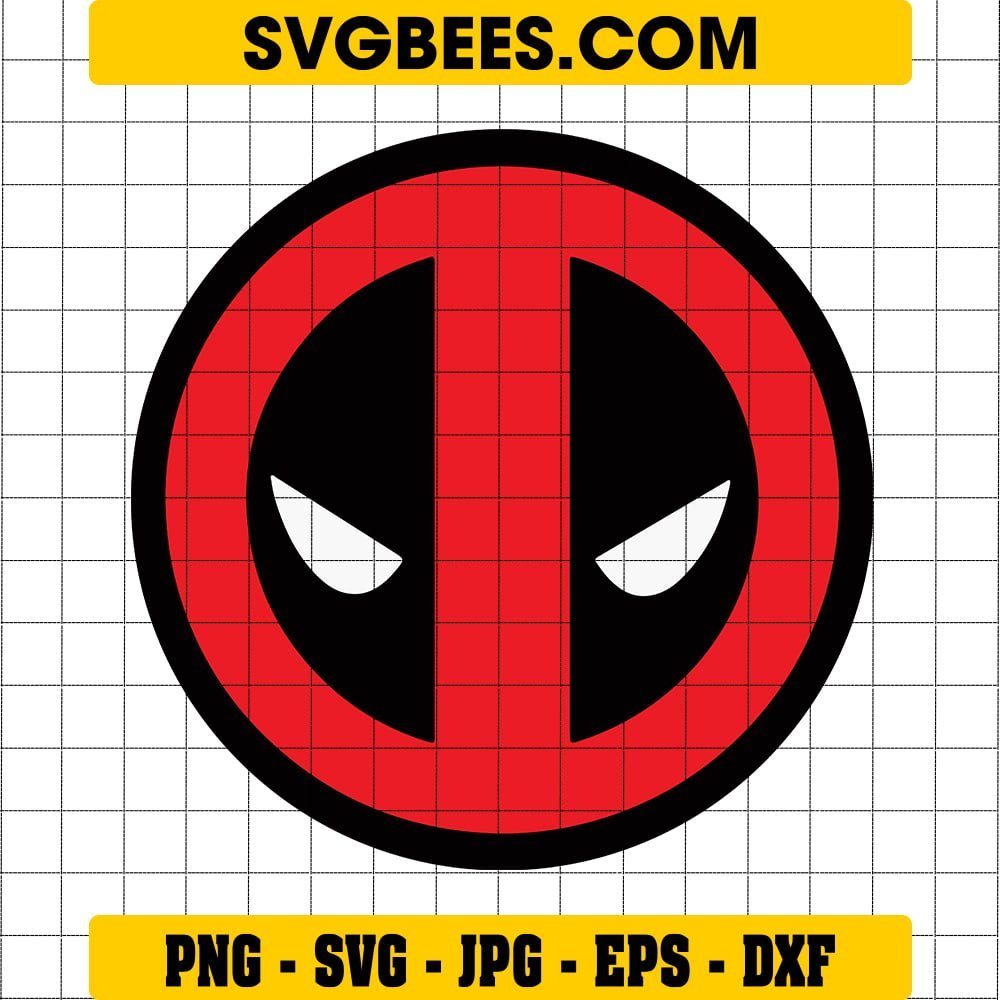
So, you're on the hunt for top-tier Vector & High-Res Deadpool Logo Downloads? Whether you're a designer crafting a fan project, a marketer aiming for that iconic anti-hero edge, or just a die-hard fan looking to customize your gear, getting your hands on the right logo files is crucial. Forget pixelated nightmares or squashed proportions – we're talking about crisp, scalable assets that make Deadpool's unmistakable emblem pop, no matter the medium.
This isn't just about finding any old image; it's about understanding the subtle nuances of file formats, usage rights, and quality that can make or break your project. Ready to dive into the nitty-gritty of securing the Merc with a Mouth's brand assets? Let's get started.
At a Glance: What You'll Discover
- Why Quality Matters: The critical difference between low-res images and professional vector/high-res files.
- Deadpool's Logo Evolution: A brief look at the iconic logo's journey.
- File Formats Demystified: A deep dive into PNG, SVG, AI, and other vector options, and what each is best for.
- Where to Find Them: Navigating legitimate sources for downloads.
- Usage Considerations: Quick tips on personal vs. commercial use and copyright.
- Practical Applications: How to use your new assets for digital, print, and beyond.
The Irresistible Charm of Deadpool's Emblem
Deadpool. Just the name conjures images of rapid-fire quips, fourth-wall breaks, and a unique brand of chaotic heroism. Much of this persona is encapsulated in his distinctive logo: a stylized, almost playful 'D' that manages to convey both menace and irreverence. This emblem isn't just a symbol; it's a statement, instantly recognizable worldwide.
The character, of course, rocketed to mainstream cinematic stardom with the 2016 American superhero film, distributed by 20th Century Fox and based on the Marvel Comics icon. Directed by Tim Miller and starring Ryan Reynolds as the titular Wade Wilson, the film established Deadpool's unique place in the superhero pantheon – an R-rated, self-aware spin-off within the X-Men film series. Its success cemented the logo as a modern pop culture staple, driving demand for high-quality versions for everything from fan art to official merchandise.
Vector vs. High-Res Raster: Your First Design Lesson
Before you download anything, it’s vital to grasp the fundamental difference between vector and high-resolution raster files. This isn't just technical jargon; it's the key to professional-looking results.
Raster Images: Pixels and Limitations
Think of raster images (like JPEGs, standard PNGs, or GIFs) as a mosaic of tiny colored squares called pixels. Every photo you take with your phone is a raster image. They excel at capturing complex details and smooth color gradients, making them perfect for photographs.
However, raster images have a significant drawback: resolution dependence. If you try to enlarge a raster image beyond its original resolution, those tiny squares stretch, becoming visible. The result? A blurry, pixelated mess. A "high-res" raster image simply means it has many pixels, allowing it to be larger before pixelation becomes an issue. While a high-res Deadpool logo PNG might look great on a screen, printing it on a billboard would likely reveal its limitations.
Vector Graphics: Scalability Without Sacrifice
Now, imagine an image not made of pixels, but of mathematical paths, points, and curves. That's a vector graphic. Formats like SVG (Scalable Vector Graphics) and AI (Adobe Illustrator) files are prime examples.
The magic of vector graphics lies in their infinite scalability. Because they're defined by mathematical equations, a vector Deadpool logo can be scaled up or down to any size—from a tiny app icon to the side of a building—without losing a single bit of clarity or sharpness. The edges remain perfectly crisp, the colors solid. This makes them the undisputed champion for logos, illustrations, and any graphic that needs to maintain flawless quality across diverse applications.
If you’re working on something that needs to be resized frequently, or printed at large scales, then prioritizing understanding vector graphics is your first step to design success.
The Deadpool Logo Through the Ages: A Quick Nod to Its Evolution
While the general design ethos of Deadpool's logo has remained consistent – typically featuring a stylized "D" or his mask – there have been subtle shifts over time, reflecting different eras in his comic book and cinematic history.
According to research, the Deadpool brand has seen at least two significant logo iterations:
- Deadpool 1991 Logo: This likely refers to the earlier comic book representations, which might have had a slightly different aesthetic, perhaps reflecting the more gritty, early-90s comic art style.
- Deadpool 2018 Logo: This would be the contemporary cinematic logo, which has become globally recognized thanks to the success of the films. This version is typically sleek, bold, and instantly recognizable.
For most modern projects, you'll likely be seeking the more recent, film-inspired logo, as it's the one most people instantly connect with the character today. However, knowing these distinctions can be helpful for historical accuracy or specific retro-themed designs. You can Explore the Deadpool logo in its various forms to see how it has evolved.
Unpacking Your Download Options: PNG, SVG, AI, and More
When you're looking for high-quality Deadpool logo files, you'll frequently encounter specific file types, each with its own strengths and ideal uses. Understanding these is crucial for choosing the right logo format for your project.
PNG: The High-Res Raster for Digital Clarity
- What it is: PNG (Portable Network Graphics) is a raster image format known for its lossless compression and support for transparency.
- Best for: Digital applications where you need high quality and a transparent background. Think website headers, social media graphics, digital presentations, or overlays on other images.
- Pros:
- Excellent image quality for web and screen display.
- Supports transparency (crucial for logos that need to sit on various backgrounds without a white box around them).
- Relatively small file sizes for digital use.
- Cons:
- Not suitable for printing purposes where scalability is required. While a high-resolution PNG can be printed, it will pixelate if enlarged too much.
- Cannot be easily edited like vector files without losing quality.
When a source offers a "Deadpool logo PNG," ensure it's high enough resolution for your specific digital need to avoid pixelation.
SVG: The Scalable Vector Champion for the Web
- What it is: SVG (Scalable Vector Graphics) is an XML-based vector image format for two-dimensional graphics with support for interactivity and animation.
- Best for: Website usage is highly recommended for SVG logos. It's perfect for modern web design, especially for responsive sites and high-resolution "retina" displays. Also great for basic print use where editing isn't required.
- Pros:
- Infinitely scalable without losing quality. This is its biggest advantage.
- Small file sizes, leading to faster website loading times.
- Text-based format, meaning it can be edited with code editors.
- Supports interactivity and animation.
- Excellent for responsive design, as one SVG file adapts to all screen sizes.
- Cons:
- Can be more complex for intricate photographic images (which logos typically aren't).
- Not universally supported by all legacy software or niche applications.
A "Deadpool logo SVG" is often your go-to choice for web projects, ensuring crispness on any device.
AI: The Designer's Powerhouse for Deep Editing
- What it is: AI (Adobe Illustrator Artwork) is a proprietary file format developed by Adobe Systems for representing single-page vector-based drawings. It's the native format for Adobe Illustrator.
- Best for: Professional graphic design, detailed editing, and any project that requires manipulation of the logo's shapes, colors, or components. Essential for high-quality printing, branding guidelines, and merchandise production.
- Pros:
- Fully editable vector format. You can change colors, adjust curves, separate elements, and more.
- Preserves layers, text, and other Illustrator-specific features.
- Supports both EPS (Encapsulated PostScript) and PDF (Portable Document Format) structures internally, allowing for broader compatibility.
- The ultimate source file for professional branding.
- Cons:
- Requires Adobe Illustrator (or compatible vector editing software) to open and edit properly.
- Can be a larger file size than SVG or PNG due to retaining all editing information.
If you plan to modify the Deadpool logo in any way, a "Deadpool logo AI" file is what you need. This is the source file for maximum flexibility.
Other Vector Formats: EPS and PDF
While AI is the native Illustrator format, you might also encounter other vector types:
- EPS (Encapsulated PostScript): An older but widely supported vector format often used for professional printing and interchange between different design software. Like AI, it's fully scalable and editable.
- PDF (Portable Document Format): Often associated with documents, PDFs can also embed vector graphics. If a PDF contains vector data (e.g., if it was exported from Illustrator), it can be scaled and, in some cases, edited using vector software.
Many sites, like VectorSeek, often provide all these formats—PNG, SVG, AI, and a generic "Vector" file (which might be an EPS or a zip containing multiple vector types)—in a convenient zip file for comprehensive access.
Finding Your Deadpool Logo Downloads: Where to Look (and What to Avoid)
The internet is awash with images, but finding quality, legitimate, and usable Deadpool logo files requires a discerning eye.
Reputable Sources for Downloads
When seeking Vector & High-Res Deadpool Logo Downloads, prioritize sites that specialize in logo vectors and brand assets. Websites like freelogovectors.net and vectorseek.com are examples of platforms that host a wide range of logos, often including well-known brand and character emblems.
These sites typically offer:
- Multiple Formats: PNG, SVG, AI, EPS, and often a zip file containing all available options.
- High Quality: Files are usually professionally vectorized or provided in high resolution.
- Ease of Access: Simple download processes without excessive hoops to jump through.
Always read the terms of service on any download site. Some sites are for personal use only, while others might allow limited commercial application.
Understanding Copyright and Usage Rights
Deadpool is a Marvel Comics character, and his logo is intellectual property owned by Disney (via Marvel/20th Century Fox). This is a critical point that cannot be overstated:
- Personal Use: Generally, using a logo for purely personal, non-commercial projects (like a desktop wallpaper, a tattoo stencil for personal use, or fan art that isn't sold) is less likely to cause issues. However, technically, reproduction without permission is still a copyright violation.
- Commercial Use: Using the Deadpool logo for commercial purposes (selling merchandise, advertising, branding a business, etc.) without explicit licensing from Disney/Marvel is illegal and can lead to severe legal penalties. This includes putting the logo on T-shirts, mugs, posters, or any product intended for sale.
The files available on free logo sites are almost always provided without commercial licensing. They are intended for personal use, reference, or for designers to practice. If you need the logo for a commercial product, you must pursue official licensing channels, which can be complex and expensive. When considering best practices for brand identity for your own brand, remember to respect others' intellectual property.
Pitfalls to Avoid
- "Free Vector" Sites That Feel Sketchy: If a site looks unprofessional, asks for too much personal information, or is riddled with pop-ups, steer clear. You risk malware or poor-quality files.
- Low-Quality Traces: Some "vector" files are simply poorly traced raster images. You can spot these by zooming in and looking for jagged or inconsistent lines.
- Altering Official Logos: While AI files allow editing, drastically altering a recognizable brand logo can dilute its impact and potentially confuse consumers, even for personal projects. For official brand assets, consistency is key.
Practical Applications: How to Use Your Deadpool Logo Files
Now that you've got your high-quality files, let's explore how to put them to work.
For Digital Projects
- Websites & Apps: Use SVG files for ultimate scalability and crispness on any device. They’re lightweight and ideal for logos in navigation bars, footers, or loading screens. Design tools for SVG logos make implementation straightforward for developers.
- Social Media: A high-res PNG with transparency is perfect for profile pictures, banners, or post graphics. Ensure the resolution matches the platform's recommendations.
- Digital Presentations: Both high-res PNGs and SVGs work well here, ensuring your slides look sharp on projectors or high-DPI screens.
- Video Editing: Integrate transparent high-res PNGs for overlays, intros, or outros. Vector files can also be imported into many video editing suites as graphics.
For Print Projects
- Small Prints (Business Cards, Flyers): A high-res PNG might suffice for smaller, non-critical prints. However, a vector file (AI, EPS, SVG) is always preferred for guaranteed sharpness.
- Large Prints (Posters, Banners, Merchandise): Always use vector files (AI, EPS, or SVG) for anything that will be printed larger than a standard sheet of paper. This ensures no pixelation, even on huge formats. This is critical for merchandise like t-shirts, mugs, or custom signage, where vector files allow for clean screen printing or engraving.
- Embroidery/Vinyl Cutting: These processes often require vector files (AI, EPS, SVG) as they operate by following paths, not pixels.
Customization and Brand Building (for your own projects)
- Creating Variations: If you're building a fan project and need a monochrome version or a slightly different color scheme, an AI file gives you the freedom to make these precise adjustments without quality loss.
- Integrating with Other Elements: With a vector file, you can easily combine the Deadpool logo with other vector elements, text, or graphics, maintaining a cohesive and professional look across your entire design.
Working with AI Files: A Quick Guide for Designers
The AI file format is the gold standard for professional designers due to its unparalleled editing capabilities. If you’ve downloaded a "Deadpool logo AI" file, here’s what you can expect and how to handle it.
Opening and Editing AI Files
You’ll need vector editing software, primarily Adobe Illustrator. Other programs like Affinity Designer or Inkscape (open-source) can also open and sometimes edit AI files, though compatibility can vary with complex files.
- Open in Illustrator: Simply double-click the .ai file, or open it directly from within Adobe Illustrator.
- Layers and Groups: Most professional AI files are organized with layers and groups. The logo components (e.g., the 'D' shape, the eye details) might be separate. This allows for isolated editing.
- Path and Anchor Point Editing: This is where vectors shine. You can select individual paths or anchor points and manipulate them with tools like the Direct Selection Tool (white arrow). Want to subtly reshape a curve? You can do it here.
- Color Changes: Easily change the fill and stroke colors of any component of the logo using the color panel.
- Exporting to Other Formats: Once you’ve made your edits, you can export the logo to various formats:
- SVG: For web use (File > Export > Export As... > SVG).
- PNG/JPEG: For raster-based digital use (File > Export > Export As... > PNG). Specify resolution for raster exports.
- PDF/EPS: For print-ready files or sharing with other designers (File > Save As... or File > Export).
If you’re new to vector design, learning how to use AI files is a valuable skill that opens up a world of creative possibilities.
Frequently Asked Questions About Deadpool Logo Downloads
Q: Can I use a downloaded Deadpool logo for my YouTube channel or Twitch stream?
A: For purely non-commercial, fan-made content (like a channel banner or overlay that doesn't directly sell products), it's generally considered "fan art" and is typically tolerated by copyright holders. However, if your channel is monetized significantly or if you're using the logo to sell merchandise, it crosses into commercial use, which would require official licensing. Always err on the side of caution or seek independent legal advice if unsure.
Q: Why do I need a vector file if I just want a small logo on a website?
A: While a small PNG might look fine initially, an SVG vector logo guarantees crispness on high-resolution "retina" displays (common on modern phones and laptops) and across different screen sizes. It future-proofs your design, ensuring your logo always looks professional without extra effort.
Q: What's the best file type for printing a Deadpool logo on a T-shirt?
A: Absolutely a vector file, specifically AI or EPS, as these are the preferred formats for screen printers, embroiderers, and vinyl cutters. They allow the printer to scale the logo perfectly and separate colors for printing without any loss of quality.
Q: I downloaded a "vector" file, but it looks pixelated when I open it. What happened?
A: This usually means the file isn't truly vector, or it's a vector file with a low-resolution raster image embedded within it. Sometimes, a PDF might contain only a raster image if it wasn't originally created with vector data. Open it in a vector program like Illustrator and try to select individual paths or points. If you can't, it's likely a raster image.
Your Next Step: Unleash the Deadpool Logo with Confidence
Whether you're a seasoned designer or a passionate fan, having access to high-quality Vector & High-Res Deadpool Logo Downloads empowers you to create stunning visuals that truly capture the essence of the Merc with a Mouth. Remember to always choose the right file format for your specific needs, respect copyright, and leverage the power of vector graphics for unparalleled clarity and scalability.
Go forth and design, you magnificent bastards!